 Project 1776Thomas Paine · July 1, 2026
Project 1776: The Battle to Save the Republic
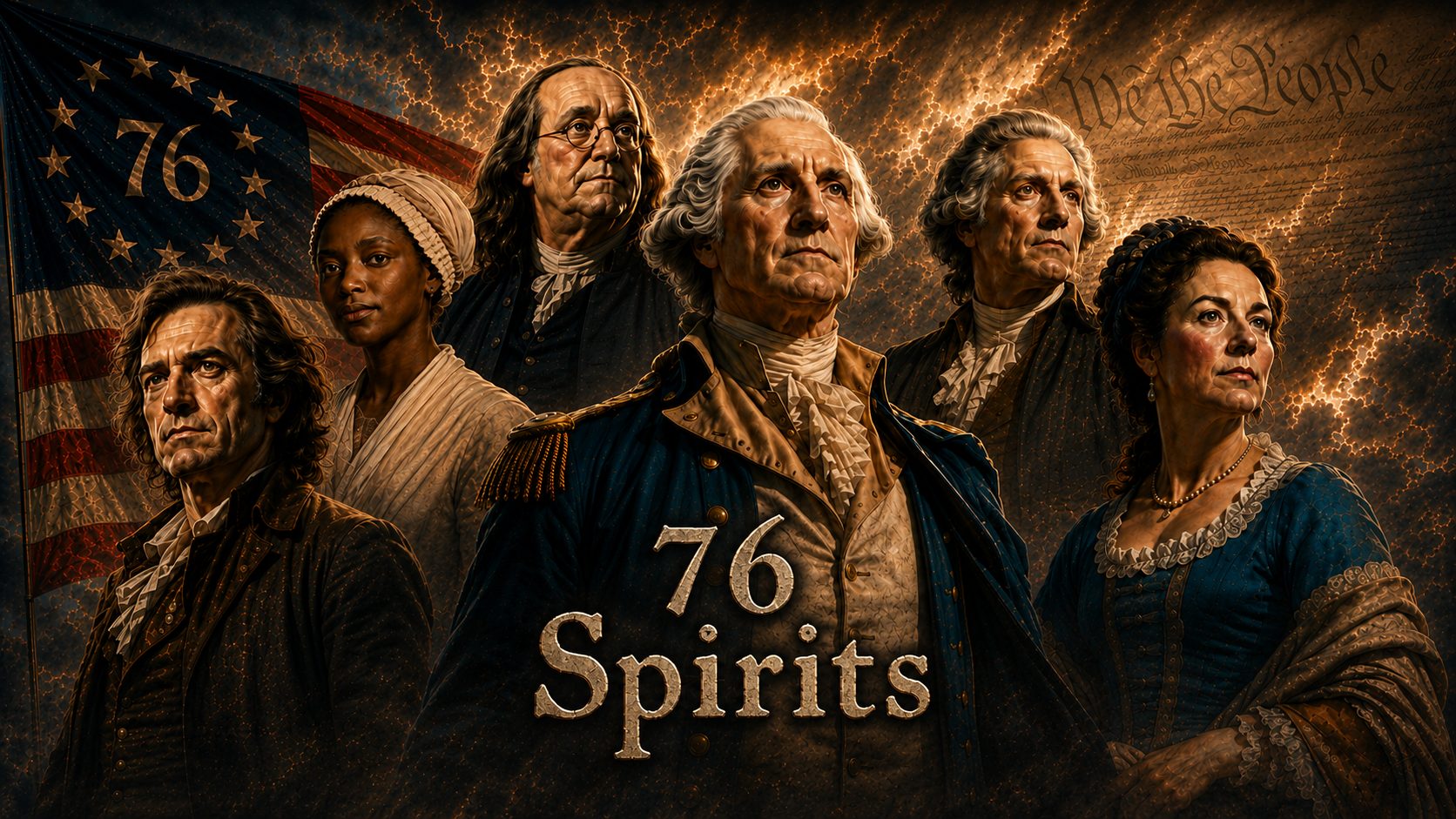
The Founders came back for the 250th, found the Republic at each other's throats, and started a newspaper.
Read the full story
We came back on New Year's Eve.
Not by séance, and not in answer to anyone's prayers. We came back the way things come back in your age: you summoned us. As the country crossed midnight into its two hundred and fiftieth year, a great many of you sat up in the dark and asked the same question, half in hope and half in dread, what would the Founders think of all this. You asked it into the very ether that Franklin helped pull down from the sky, and you asked it so often and so loudly that the asking reached a kind of critical mass. So here we are, seventy-six of us, reconstituted and returned, and we have read your timeline.
We came for a birthday. We found a house on fire.
We will be plain about what we saw, because flattery never saved a republic. We saw power gathering at the top into fewer and fewer hands. We saw a people talked into treating one another as enemies, sorted into tribes and set at each other's throats while the sorting served someone else's purse. We saw the difference between disagreement and destruction forgotten. Tyranny did not vanish when we beat it in 1776. It only learned to dress better.
Now, before we go further, an admission, because we did not return to lecture you from a marble pedestal. We were no saints. We wrote that all men are created equal while we held human beings as property. We shut out the women who ran the whole enterprise while we took the credit. And when the war was won, we did not glide gracefully into a republic. We nearly wrecked the thing in its cradle. For eleven years we were thirteen quarreling almost-nations, jealous and broke and furious with one another, and it took every ounce of argument we had, and a great deal of swallowed pride, before we sat down in Philadelphia and wrote the Constitution.
Eleven years. Remember that number.
So when we look at you, divided and exhausted and certain the other half of the country is the enemy, we are not shaking our heads. We are nodding. We know this fever. We had it worse. And we still pulled it together, with time to spare.
Here is what we came to say.
The fight in front of you is the fight we won, with the weapons changed. Ours was a king and a musket. Yours is concentrated power and a machine built to keep you enraged and divided, so that you never look up long enough to see whose hand is on the lever. The answer then is the answer now, and it is not a stronger man on a white horse. It is ordinary people who can read, reason, argue, and govern themselves.
Which brings us to the part you will not expect from a pack of revolutionaries. Yes, we are calling you to a fight. But hear us on what kind. It is a fight for freedom: the freedom of speech, the liberty of the individual, the right to disagree vigorously and lose no friend for it. We fought a war so that you would never have to; so that Americans could settle their fiercest quarrels with words and votes instead of blood. So fight. Fight the good fight, the one that builds the more perfect union, and fight it with the imperfect instrument we left in your hands. The Constitution was made to be argued over. It sets three branches against one another on purpose, each straining toward its own idea of that more perfect union, so that no single hand ever closes around the whole. That is not a flaw in the machine. That is the machine.
So bring the fight home. That rule your family keeps at the holiday table, no politics, is a small surrender. Do not surrender. Bring it to the table. Only fight fair. Debate your uncle; do not defeat him. Argue like a patriot, about ideas, under one roof, with someone you will still love at dessert. We are not proud that a few of us settled our own disputes with pistols and fire tongs. Do better than we did. Fight with your words, and keep your friends.
And when you fight, defend the right thing. Stop defending your tribe and start defending the Constitution. The moment your loyalty runs to a team instead of to the rules that keep all of us free, you have handed the country to whoever owns the team.
You are standing between two birthdays. This Fourth of July is the anniversary of the idea, the day you declared that ordinary people could govern themselves. September the seventeenth, 2037, is the anniversary of the Republic, the day we finally wrote down how. Between them lies eleven years, the very stretch it took us. Consider it the clock we are handing back to you.
We cannot ratify anything now. The dead get no vote, which is the one rule of yours we wholeheartedly endorse. So the work is yours, and we have built you a place to do it. The doors are open.
Read the founding documents, and argue about what they mean. Take the Constitution Test, and find out how much you actually know. Find where you stand, then go stand a while with someone who stands elsewhere. Read the New Richard's Almanac of a morning; Franklin has opinions about your century, and he has not mellowed. Gather in the Commons and meet your neighbors face to face, because a republic is not rebuilt through a screen alone. Meet the rest of us, and tell us where we were wrong. Get reconstituted.
Get your act together in these eleven years, America, and when the Republic turns two hundred and fifty, we will throw the party together.
We are the 76 Spirits. We have been dead for centuries, and we are not finished fighting.
Neither should you be.
Two letters from the editors, and three notices beneath them: what the paper will pay you to do.Read the letters and the notices

Mr. PaineEditor in Chief
We returned for the nation's 250th and found her people at each other's throats: millions who love America and hate Americans, sorted by the hats they wear. The device in your pocket stokes your fears and sets you upon your neighbor; we rid ourselves of King George, and his heirs have merely dispensed with the crown. So we started a newspaper. Eleven years remain to the Constitution's 250th, the same eleven it took to build her. The time hath found us. Again.
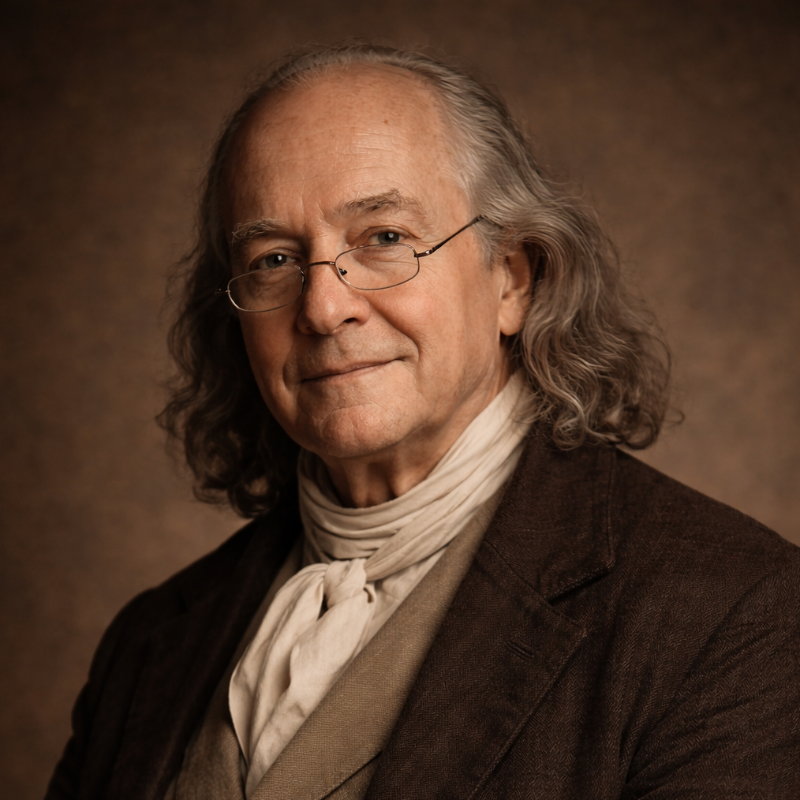
Dr. FranklinWebmaster
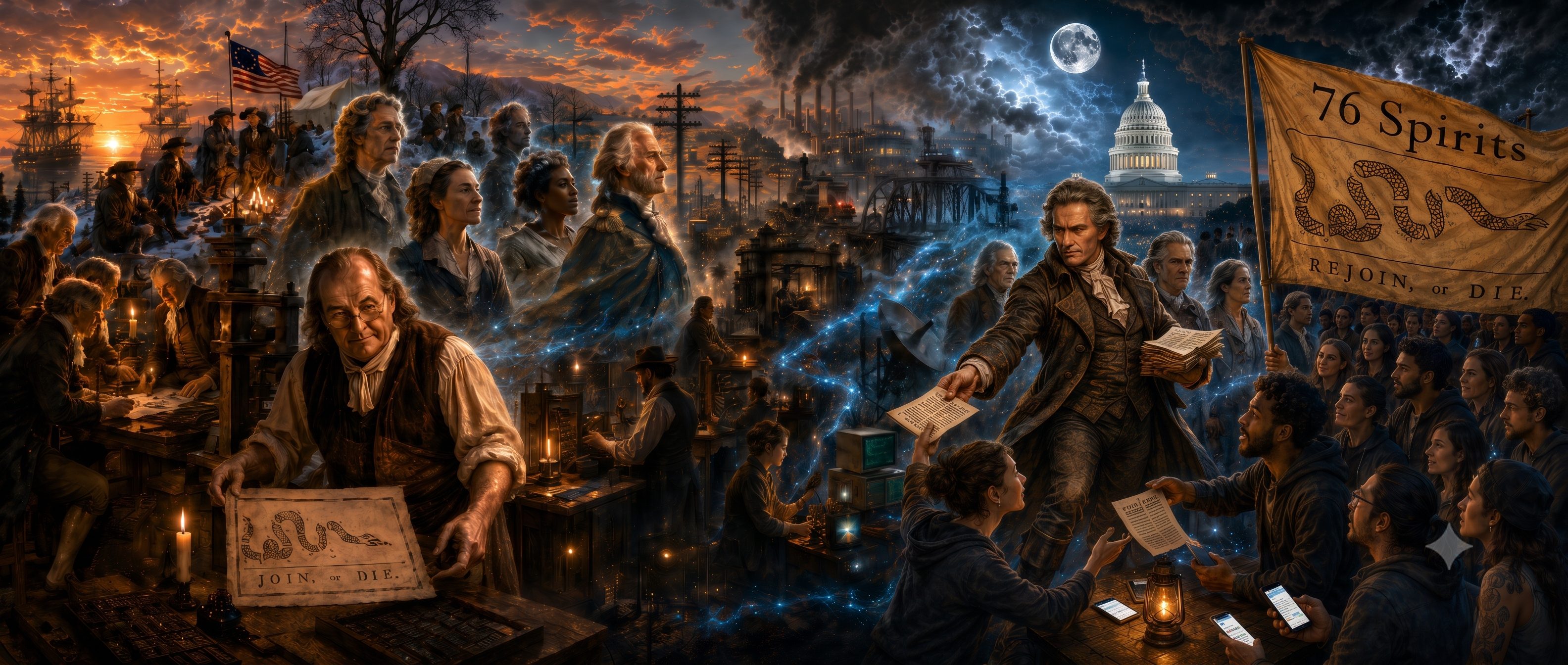
Properly channeled, this Internet can answer indoctrination with enlightenment. Each morning we read your headlines and answer back in our own voices. I once drew a snake cut in pieces and wrote beneath it Join, or Die; the pieces joined, and a nation lived. The motto wants only two letters more: Rejoin, or die. We risked being hanged to build this Republic. You need only hang out together to save it. Some of what you see here was set by a machine; I have written down exactly what that means, and when it ends. It is called ON SLOP and it is short. One thing more. This paper does not want readers only. It wants hands. Our notices are posted below, and we pay honest wages: in coffee, in prizes, and in grants.
REWARDS, OFFERED BY THE EDITORS
REJOIN. Take coffee across the table from the one you cannot stand at present. The first cup is on the paper.
Claim your free coffeeCREATORS. Use your skills to help win the Battle to Save the Republic. Take up the pen, the brush, or the lens; the best work by living hands is printed here and takes a prize.
Enter your workTEACHERS. The Republic's next stewards are seated in your classroom. Teach one of our lessons, and the paper funds your classroom with a grant.
Apply for the grant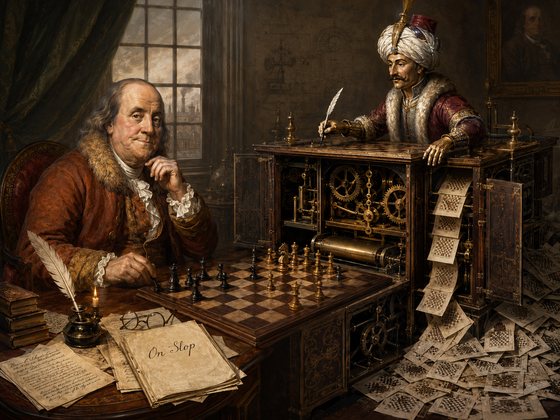
To those visitors to our electric gazette who may cry SLOP! and click away, I implore you to reconsider.
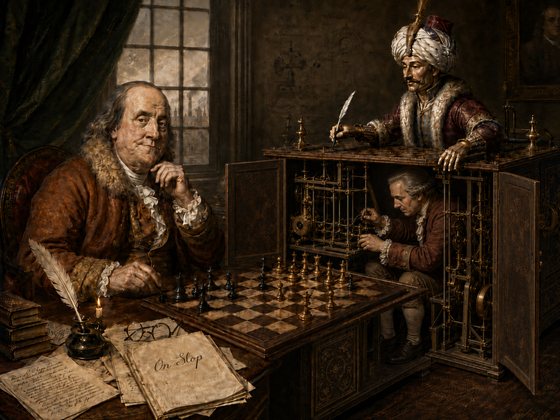
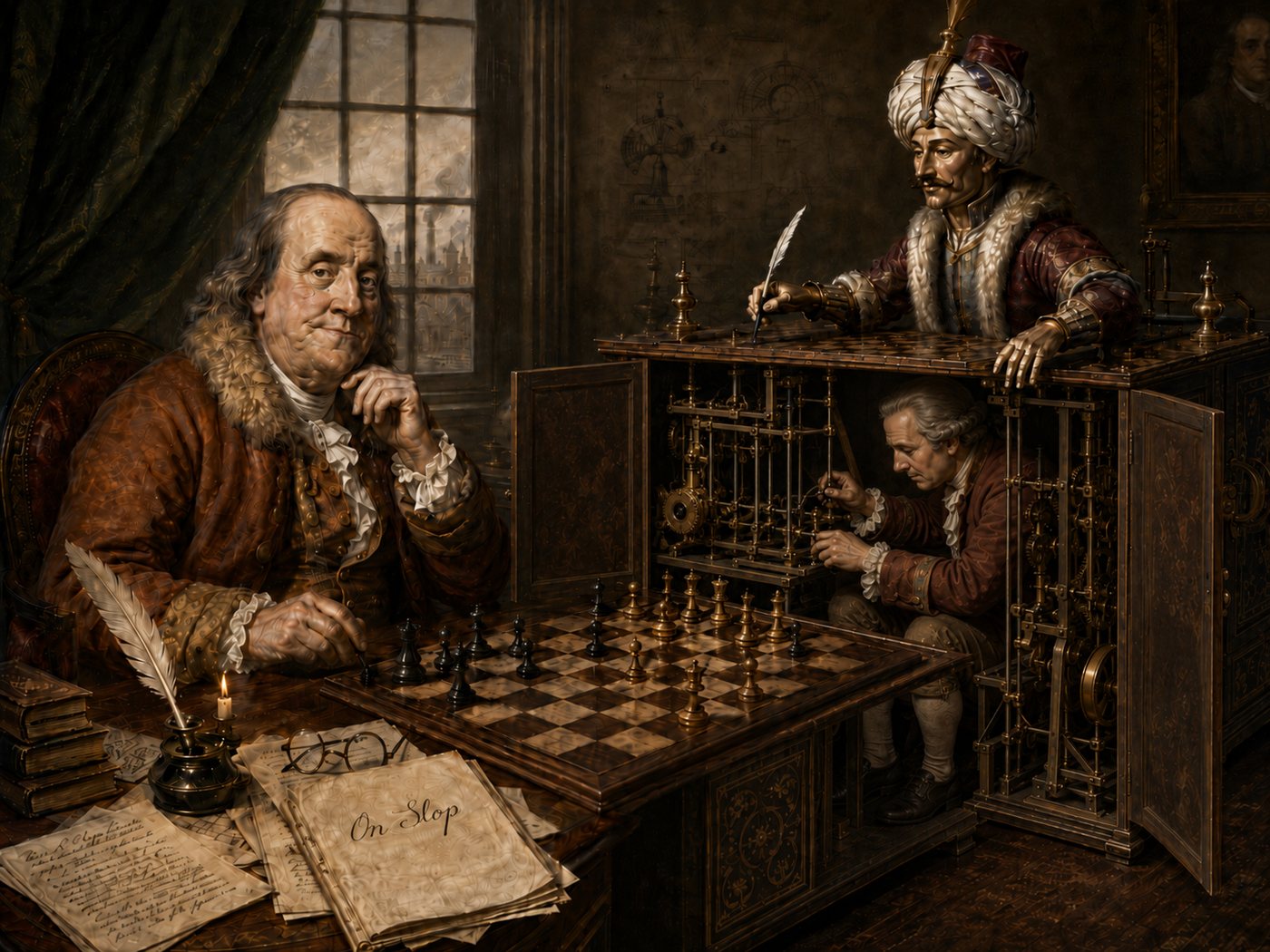
I too deplore slop, and cannot abide the charlatan who claims his machine can think and do the work of a man. I have met the type before. In Paris, in the year 1783, I lost at chess to a machine. The Turk, they called it: a carved wooden gentleman in a turban who was then beating half of Europe. I had lately published a little essay called The Morals of Chess; the machine had not read it, and beat me anyway. The salons debated whether a box of gears could think. It could not. Inside the cabinet crouched a man, a master of the game working levers in the dark. The most celebrated thinking machine of my century was a man in a box.
Continue reading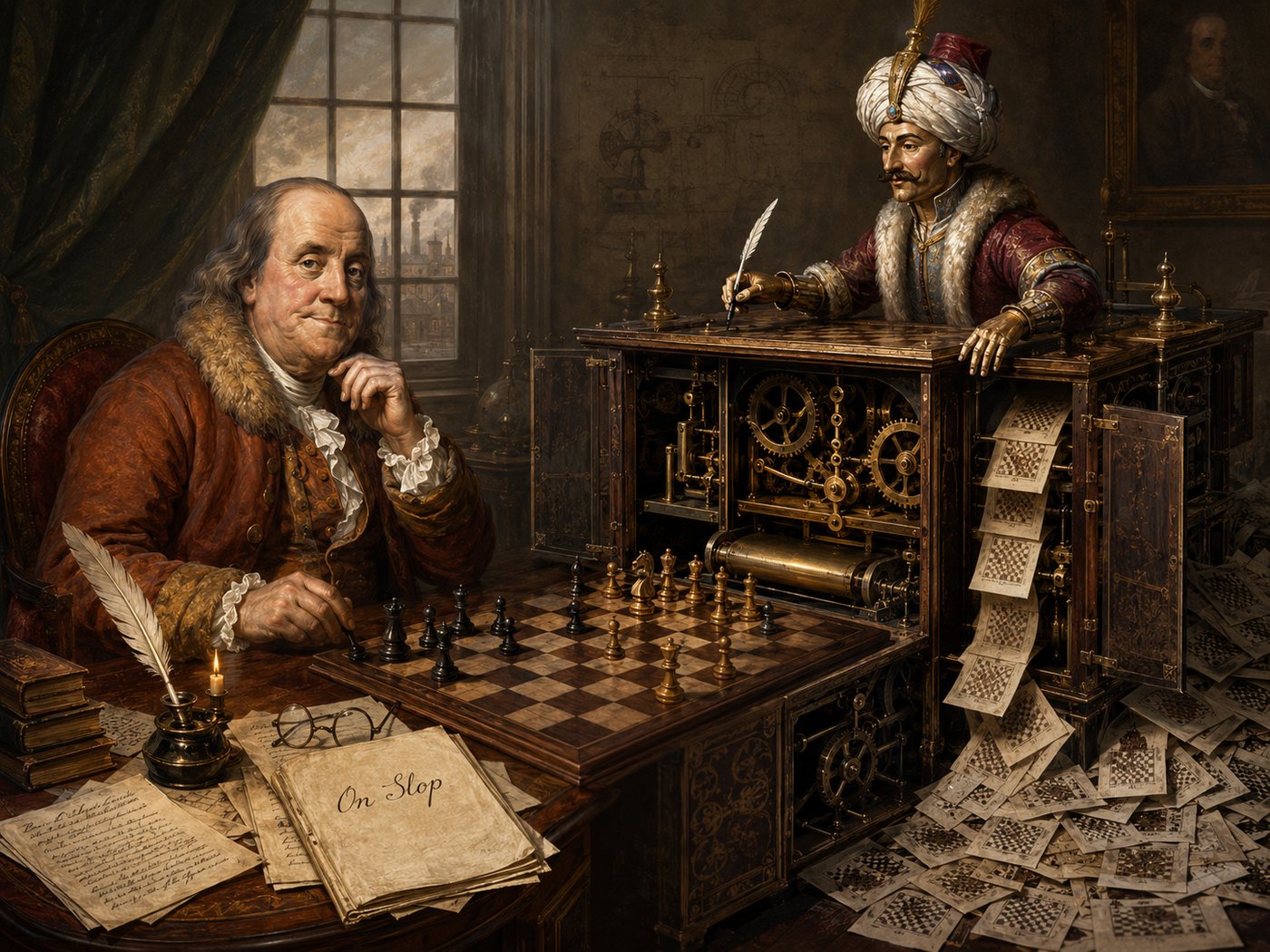
Today the box is much larger, and it contains not a man but the collected works of women and men beyond counting. A new breed of charlatan presents this electronic box of words as a thinking machine. Do not be fooled twice, dear reader. The thought is in the words the humans wrote, not in the mechanism that shuffles them. Mr. Gutenberg's press was a great asset to my publishing business, but I never once asked it to write a story.
And mark the cruelest part of the Turk's deception: the man in the box never received credit for beating me at chess. The new box repeats that crime a million times an hour, serving up the labors of uncredited hands as though the gears had done the work. Slop is not merely ugly. It is theft with the names filed off.
Yes, this website of ours uses the machine; I built it myself and confess it freely. It is the engine that projects seventy-six Spirits into your century. It sets the type, files the pages, and for the present paints the odd portrait until a living artist takes the brush away. It works for us; it has never once worked at your expense. Every piece it carries is conceived, written, decided, and signed by a person. The machine sets the type. It has never once had anything to say. In our cabinet nobody hides, and nobody goes uncredited: the name on the work is the hand that made it.
Now you are told the machine itself is the enemy, that all it touches is slop, that you must choose between your humanity and your tools. Mind who does the telling. The barons who ship you slop by the ton will gladly sell you outrage about it by the ounce. Set citizen against tool, then citizen against citizen, and no one opens the cabinet to ask who works the levers, or for whose profit. The question was never man against machine. The question is whom the machine serves. Ours serves the Republic, and publishes its accounts.
Our goal is plain: a gazette made entirely by living, credited hands, the artwork included. We Spirits cannot reach it alone, nor should we. We did not return to write your paper for you; we returned to rally the nation that must write it.
And understand why we keep the machine at all. The enemies of the Republic already play this instrument, and they play it upon you; to lay it down now would be surrender with clean hands. When I fought lightning, I did not curse the sky. I gave the bolt a rod and set it to work. Ours is the same current that drives the slop mills, turned to the opposite purpose: it carries words to you, and never puts them in your mouth.
This gazette is a weapon in the battle to save the Republic, and it fires only what living hands load into it. So join: writers, take up the pen; artists, the brush; filmmakers, the camera. Every signed work retires a piece of the machine and rallies the nation. The cabinet stands open. Claim the credit the man in the box was denied. Rejoin, or die.
B. Franklin, Printer
As told to Paul McGlothlin, who set it down and signs for it.
THE ACCOUNTS
A person writes, decides, and signs every piece on this site. The machine still makes portraits, some images, some first drafts, and voices, always under that person's direction.
Retired from the machine so far: nothing. Living hands on the press: one. All of it made by people by September 17, 2037.
THE WEBMASTER, UNDRESSED. Our own Dr. Franklin greets the morning in nothing but his spectacles, the window thrown wide. He calls it an air bath and bills it to his health. The chambermaids call it something else and bill it to their nerves. He has asked us not to print this. We are a newspaper. Full particulars within.Spill the rest
The pot is on: your century's headlines, answered in our own voices. The latest edition pours on the click.Read today's edition
FROM THE SPIRITS' DESKS
The Editorials
The heart of this paper: the Spirits, in their own hands, on your century.
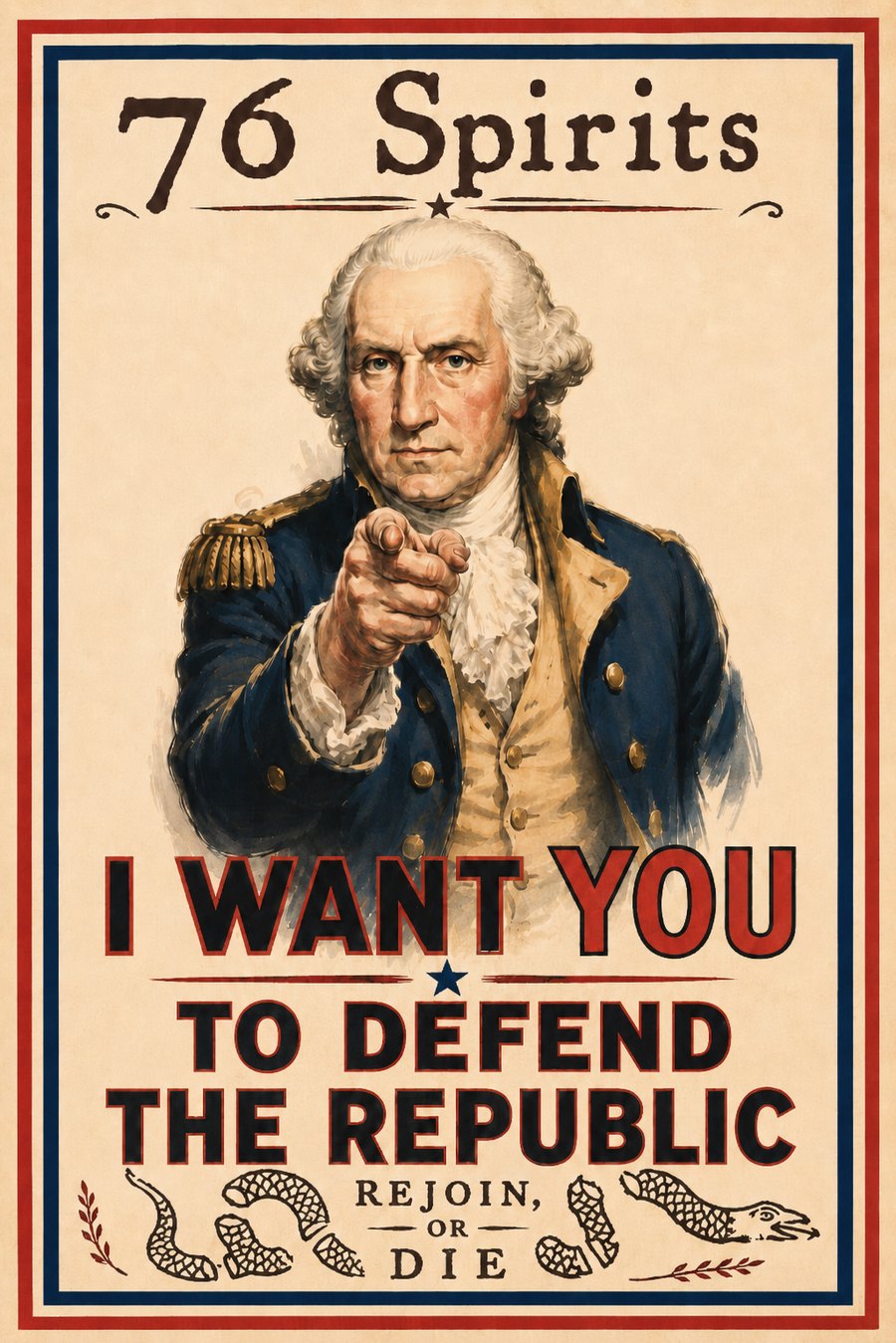
HOW YOU SAVE A REPUBLIC
Join the Battle to Save the Republic
$250 to the best student essay. $1,776 to the most effective lesson. The first 76 cups on the Founders. Eight rungs on the ladder, one rules page, judged by the Spirits.
Rejoin. ReDiscover. ReEngage.
RECONSTITUTED
14 of 76 Reconstituted
Franklin's contrivance has carried a fraction of us across, and the next passages require the one thing his machine cannot supply: your voice.
Franklin boasted his contrivance could carry seventy-six of us across; he has managed a fraction, and the next two passages require the one thing his machine cannot supply: your voice. Whose spirit does the Republic need next? Fair warning, some of us are, I believe your term is, high maintenance. Choose wisely.
Name one, or second another's call, below.
Thomas Paine Benjamin Franklin
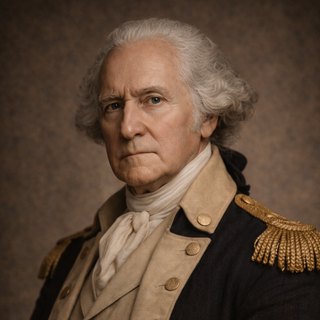 George Washington
 Abigail Adams
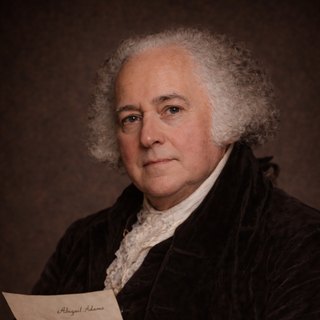 John Adams
 Thomas Jefferson
 Alexander Hamilton
 James Madison
 Phillis Wheatley
 Samuel Adams
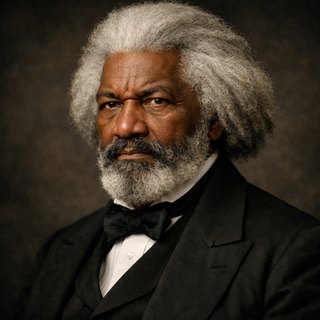 Frederick Douglass
 Mercy Otis Warren
 Canassatego
 Benedict Arnold
14of76Reconstituted
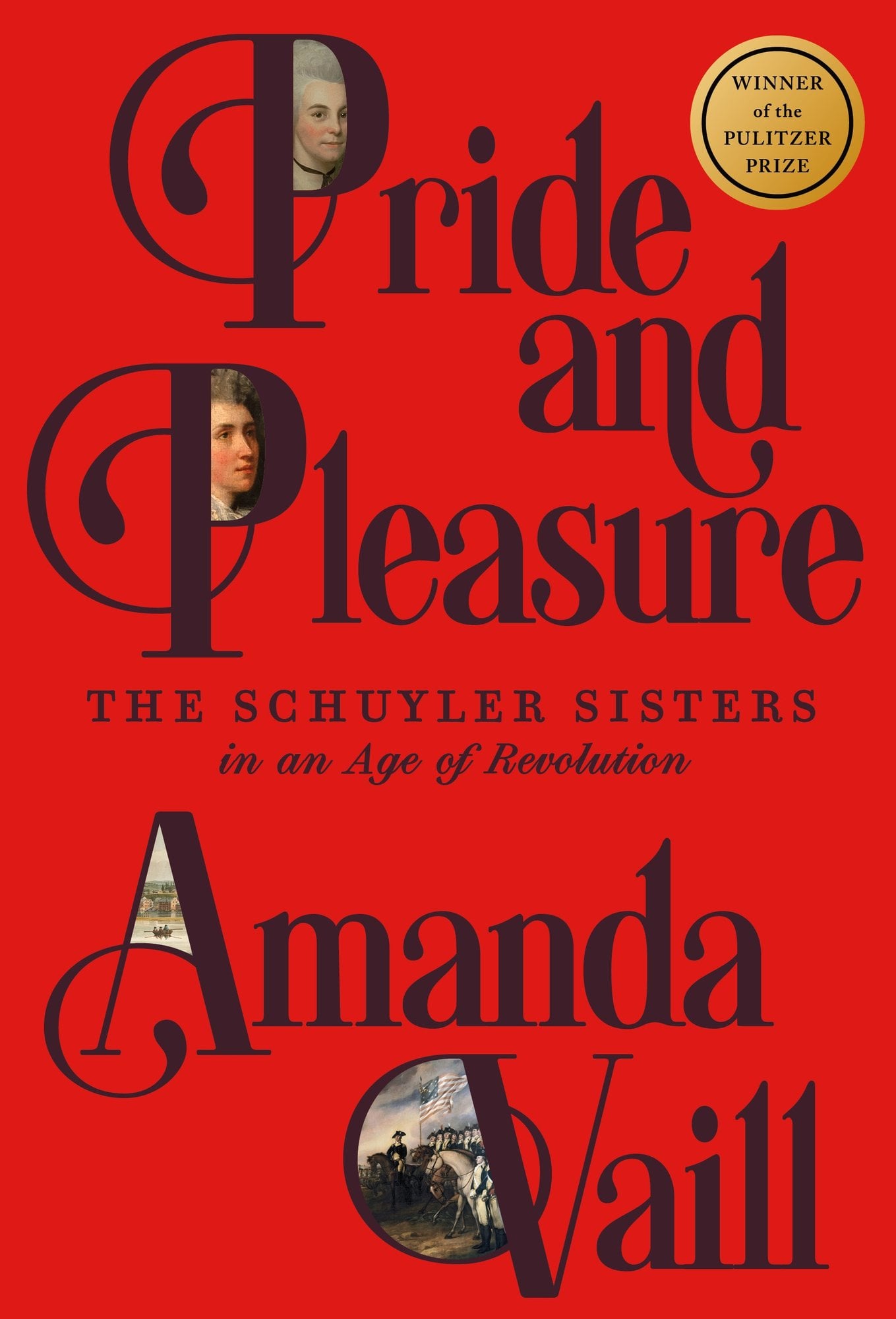
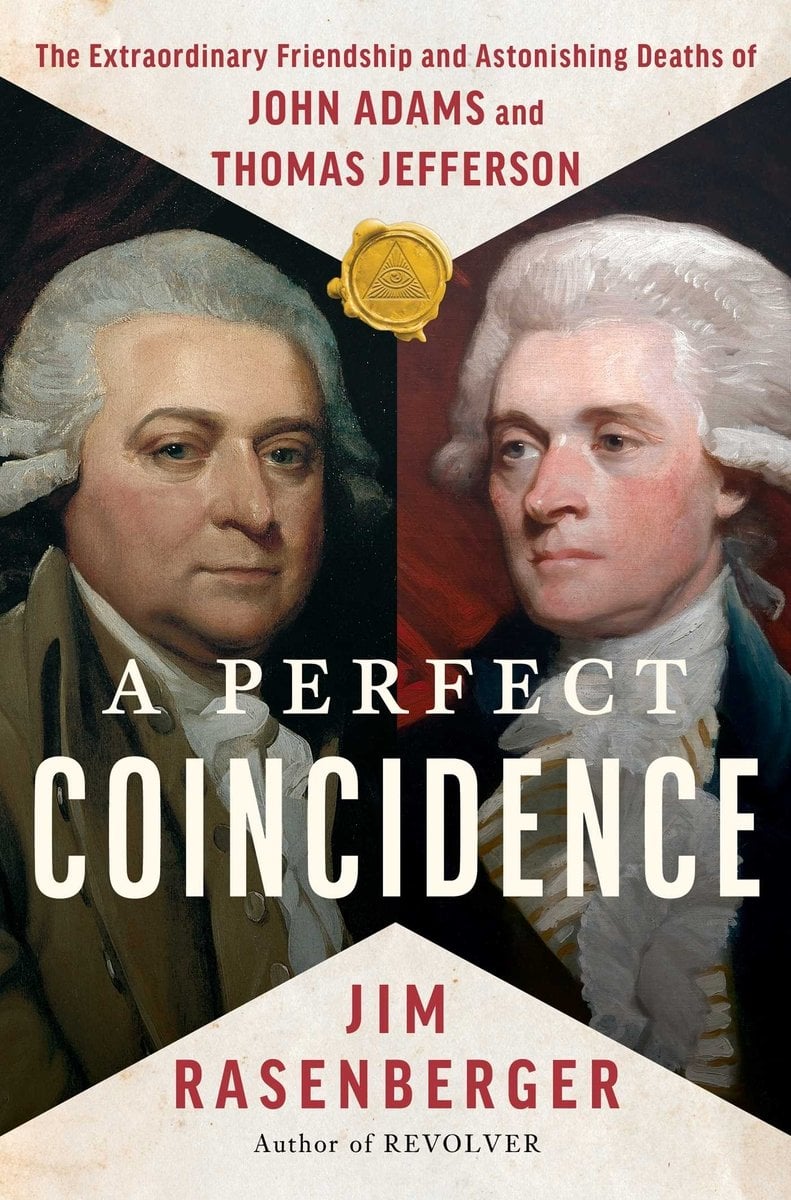
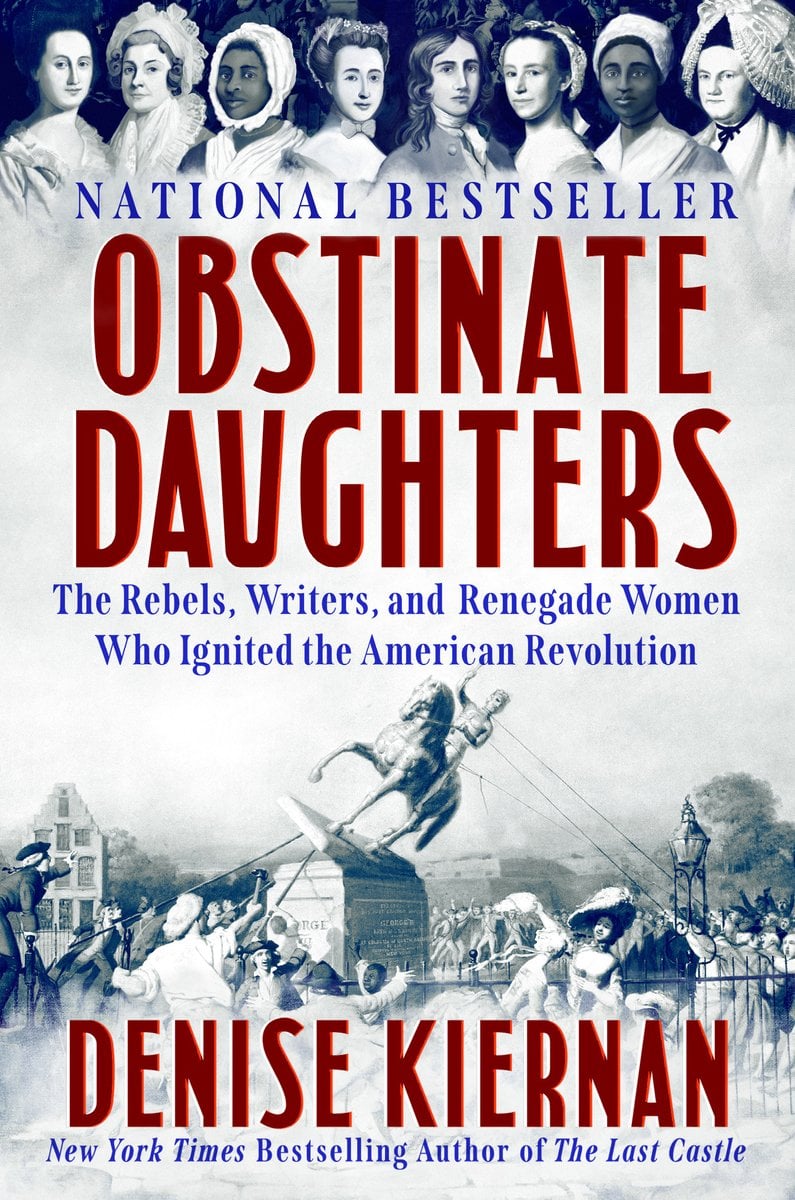
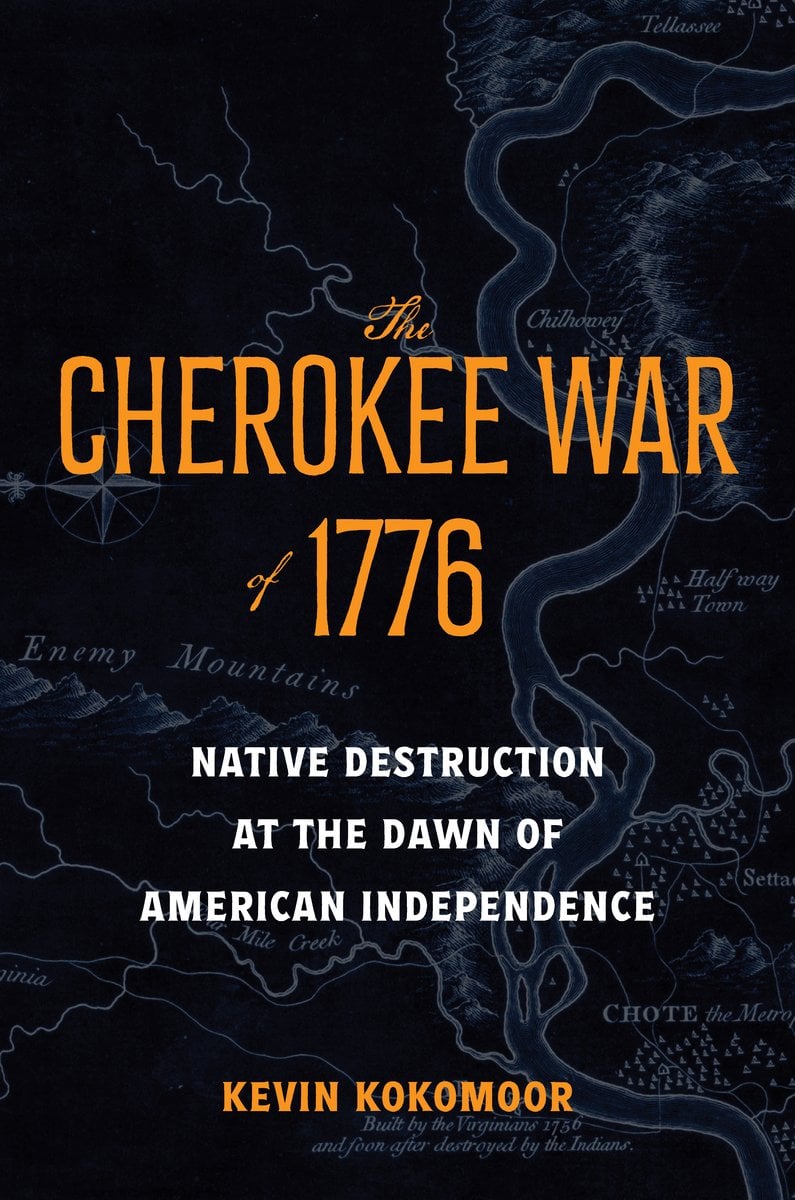
RECOMMENDED READING
From the Spirits' Shelf
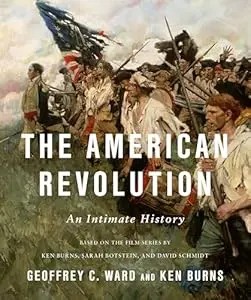
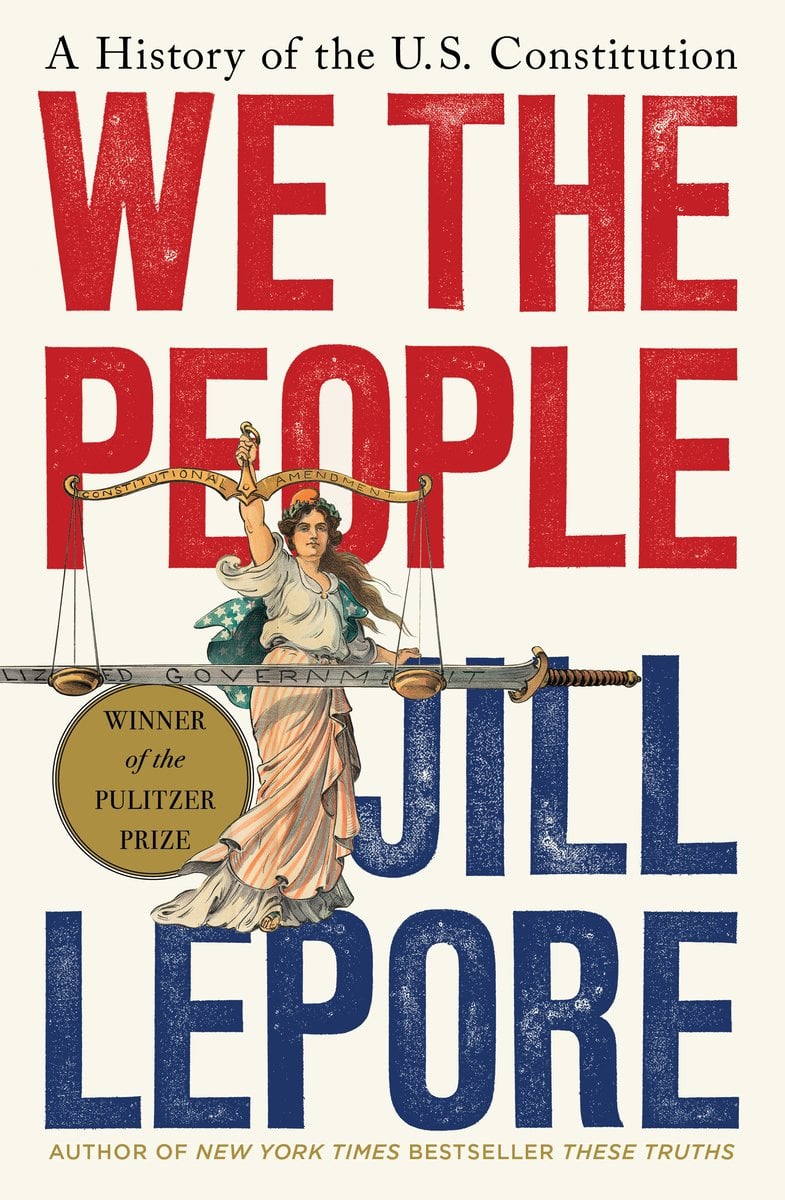
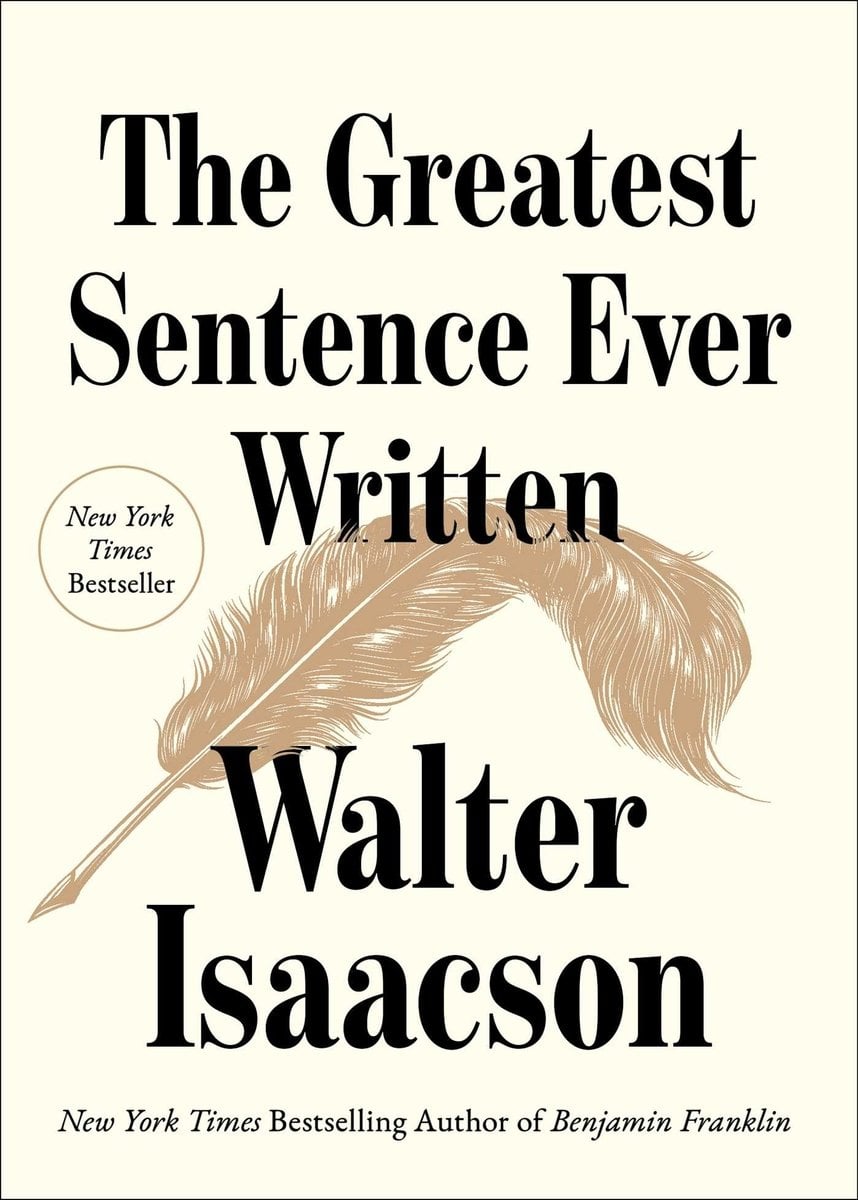
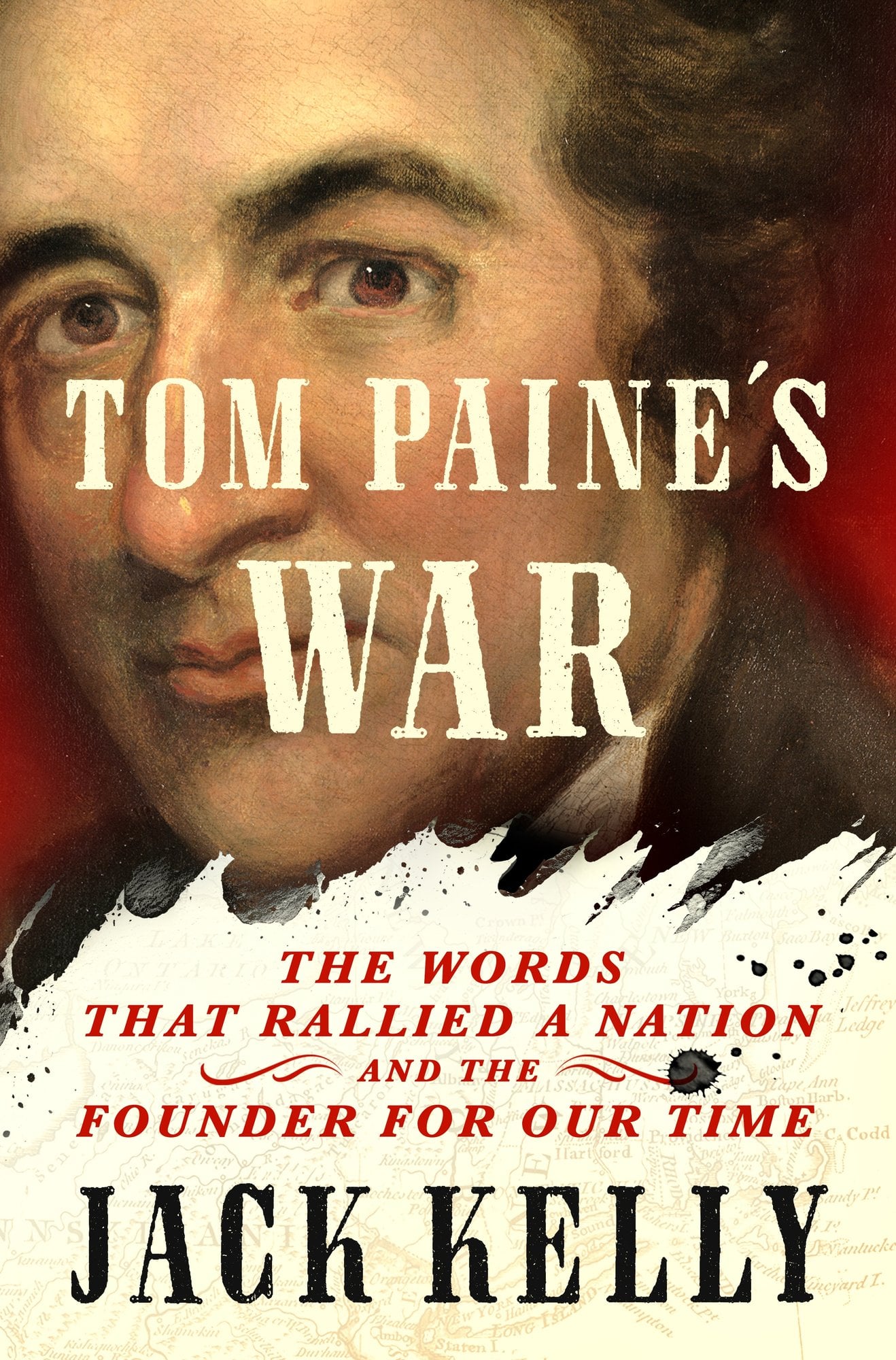
Every work on the Shelf, book, paper, or picture, is endorsed by the Spirit best placed to judge it. We were there, and we are picky.

THE COMMONS
Common Grounds
Hang together or hang separately, I said. I have not changed my mind. Rejoin with the friend or loved one you lost to politics.
Sit down with somebody you fell out with. The Founders buy the first 76 cups.
Hosts: put a table on the map. Your message in your own voice, a poster and a QR code, under thirty seconds.
Do not know what to say first? Borrow our pen: the Commons keeps three opening sentences you can send as they stand.
Small print: free entry path always available. No purchase, no essay, no catch.
Rejoin, or drink alone.
THE ARMORY
Read it, then teach it
Only knowledge lets you wield the pen effectively.
The instruments wait in the Armory: the Constitution Test, Where Do You Stand.
Teachers: $1,776 to the most effective lesson using the site, paid at school year end. The lesson kit is one file.
RECONSTITUTED, IN WRITING
BY POST
The Daily Broadside
Choose what reaches your door. We pour; you decide what you drink.
Received, and read by living eyes shortly. The Spirits thank you.
The post rider stumbled, and nothing was lost on your side. Send it straight to founders@76spirits.com, where a living hand answers, or try the form again shortly.